
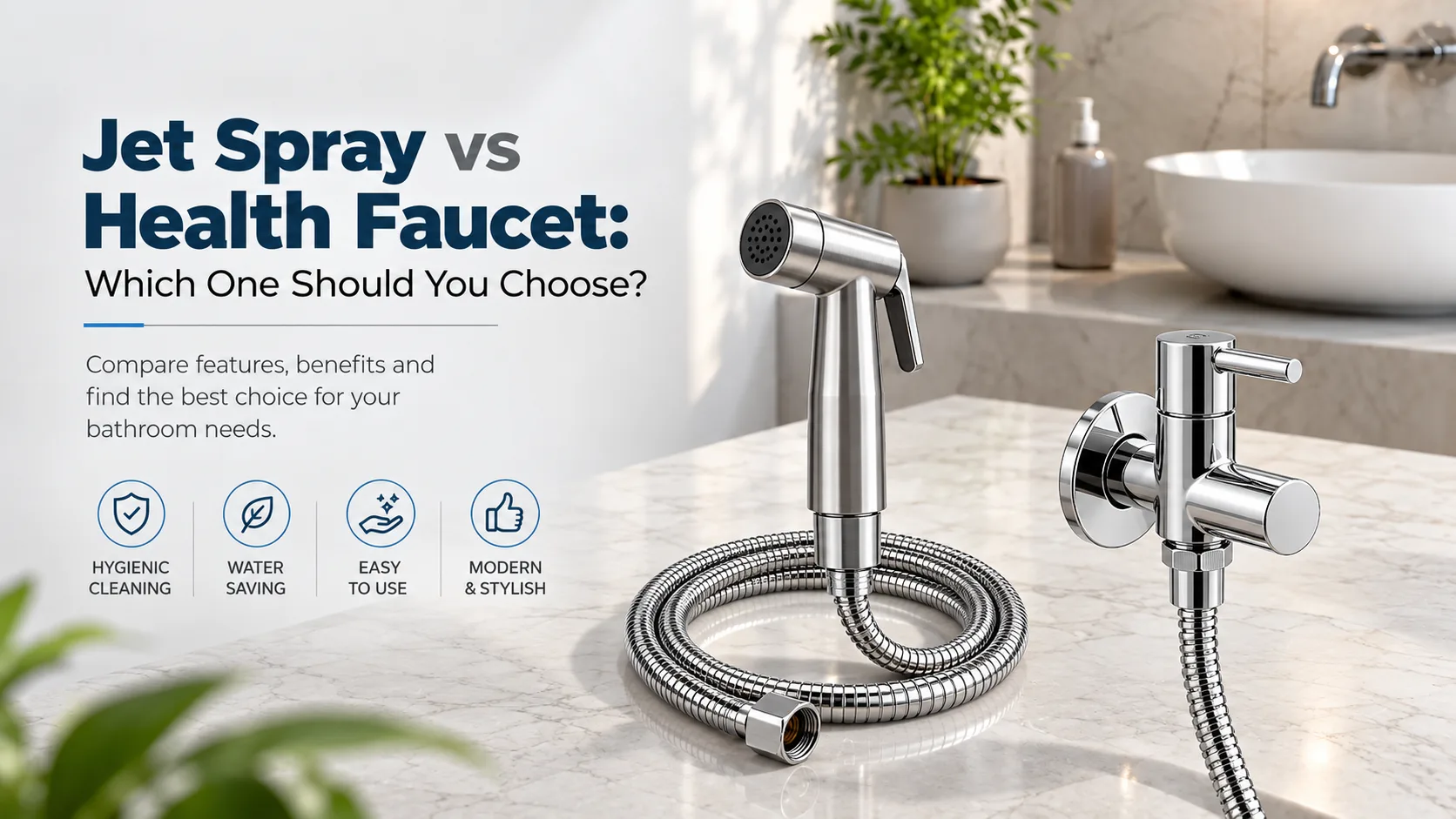
Jet Spray vs Health Faucet: Which One Should You Choose?
Jet Spray vs Health Faucet: Which One Should You Choose?
Walk into any bathroom fittings showroom and you'll hear "jet spray" and "health faucet" used almost interchangeably. Plumbers describe them differently depending on the region, and product catalogs don't always clear things up either. If you're renovating a bathroom or fitting out a new one, this mix-up can end with the wrong fitting attached to the wrong plumbing setup.
This guide breaks down what actually separates a jet spray from a health faucet, how each performs in daily use, and which one suits your bathroom better.
What Is a Jet Spray?
A jet spray is a handheld bathroom fitting connected to a flexible hose that delivers a concentrated, high-pressure stream of water. It's usually mounted near the toilet and used for both personal cleansing and general bathroom cleaning. The nozzle on this fitting tends to be narrower, which is what gives it that forceful, focused stream.
Jet sprays are common across Indian and Southeast Asian bathrooms and are typically installed as a standalone fitting rather than bundled with a larger fixture set.
What Is a Health Faucet?
A health faucet, sometimes called a bidet spray or hand shower attachment, serves a similar purpose but with a gentler, wider spray pattern. It's built mainly for personal hygiene rather than cleaning duties, and the water flow is usually softer and more evenly distributed than a jet spray's.
Health faucets are commonly paired with a wall-mounted hook or holder and installed close to Western-style toilets. Many premium collections, including the range available from RSM Bath Fittings, offer these fittings with adjustable flow control for a more customizable, comfortable experience.
Jet Spray vs Health Faucet: Key Differences
| Feature | Jet Spray | Health Faucet |
|---|---|---|
| Primary Use | Cleaning and personal hygiene | Personal hygiene |
| Water Pressure | High and concentrated | Moderate and evenly distributed |
| Nozzle Design | Narrow, focused stream | Wider, softer spray |
| Common Placement | Near the toilet, typically as a standalone fixture | Near a Western-style toilet, usually wall-mounted |
| Best Suited For | Utility bathrooms and cleaning-focused use | Daily hygiene and comfort-focused bathrooms |
| Flow Control | Basic on/off trigger | Often features an adjustable flow trigger |
| Common Materials | Stainless steel or chrome-plated brass | Stainless steel or chrome-plated brass |
Water Pressure and Flow: What Actually Changes
The real difference between these two fittings comes down to pressure and comfort. A jet spray's narrow nozzle concentrates pressure at the point of contact, which makes it more effective for rinsing tiles, floors, or the toilet bowl. It spreads the same water volume across a wider area, which lowers pressure and makes it more comfortable for direct hygiene use.
If your home has low water pressure, a health faucet's wider spray pattern usually performs better, since narrow-nozzle designs depend on pressure concentration to work well. This is worth checking before you buy, especially in upper-floor apartments where pressure tends to drop.
Installation and Plumbing Requirements
Both fittings connect to the same basic plumbing setup — a flexible hose attached to the water supply line near the toilet — so switching from one to the other rarely needs major plumbing changes. What does matter is the wall mounting point and hook placement, since these fittings are often positioned slightly differently to suit comfortable hand-hygiene use.
Before installing either fitting, check:
- Water supply line compatibility (standard ½-inch connections fit most fittings)
- Wall material for hook or holder mounting
- Existing hose length against your bathroom layout
For matching accessories, tube and hook fittings that pair with either option should match the finish and hose length of your existing fixtures to keep the installation clean and functional.
Water Efficiency and Certification Standards
Water-efficient fittings aren't just good for your utility bill — they're increasingly a certification benchmark globally. The U.S. EPA WaterSense program certifies faucets that use significantly less water than standard models without sacrificing performance, a benchmark many manufacturers now design toward even outside the US.
On the plumbing-code side, bodies like IAPMO set installation and material standards that inform how such bathroom fittings are manufactured and tested worldwide. In India, the Bureau of Indian Standards performs a similar role for domestic certification of plumbing and sanitary fittings.
Choosing a fitting that meets recognized material and water-efficiency standards is a simple way to avoid replacing it within a year or two.
Hygiene and Material Considerations
Both fitting types are typically made from chrome-plated brass or stainless steel, both of which resist corrosion and clean easily. For durability, look for fittings with a lead-free brass core — a standard many manufacturers now follow in line with health and safety compliance testing performed by bodies like NSF International, which certifies water-contact products.
Material quality affects more than lifespan. A poorly finished nozzle can develop uneven spray patterns over time as mineral deposits build up, regardless of the fitting type.
Which One Should You Choose?
The right choice depends on how your household actually uses the bathroom:
- Choose a jet spray if you want a fitting that doubles as a cleaning tool for the toilet area and bathroom floor, and a firmer water stream doesn't bother you.
- Choose a health faucet if comfort and gentler flow matter more, especially in bathrooms used by elderly family members or children.
- Consider both if your layout allows it — many households install a jet spray near the toilet for cleaning and a separate health faucet or hand shower for daily hygiene.
If you're unsure which fits your bathroom's water pressure and layout, browsing allied bathroom fittings alongside your faucet and shower choices can help you plan a coordinated setup rather than buying fittings one at a time.
Pairing With the Rest of Your Bathroom
Neither fitting usually works in isolation. Most bathrooms pair it with a matching showers setup, a kitchen sink fitting if the plumbing run is shared, and smaller essential items like grab bars or holders. Matching finishes across these fittings — chrome, matte black, or brushed steel — keeps the bathroom looking intentional rather than assembled piece by piece.
For touch-free hygiene setups, some households now pair a traditional health faucet with a sensor faucet at the wash basin, splitting hygiene tasks between the two fittings.
Maintenance Tips for Longer Life
- Clean the nozzle weekly with a soft brush to prevent mineral scale buildup, especially in hard water areas
- Check the hose connection point every few months for leaks or loose fittings
- Avoid pulling the hose at sharp angles, which weakens the internal coil over time
- Replace worn washers promptly to prevent dripping at the base
Routine maintenance matters more with hard water, a common issue across large parts of India, since mineral deposits can clog nozzle holes on both fitting types faster than in soft-water regions.
Frequently Asked Questions
1. Is a health faucet the same as a jet spray?
No. Both are handheld bathroom fittings connected to a hose, but one has a wider, gentler spray built for hygiene, while the other delivers a narrower, higher-pressure stream better suited to cleaning tasks.
2. Which is better for low water pressure homes — jet spray or health faucet?
A health faucet generally performs better in low-pressure setups because its wider spray pattern doesn't rely as heavily on pressure concentration to feel effective.
3. Can I install a health faucet in place of an existing jet spray without replumbing?
In most cases, yes. Both fittings use the same standard water supply connection, so you can usually swap one for the other without major plumbing work — just confirm the hose length and hook placement suit your layout.
4. Do jet sprays use more water than health faucets?
Not necessarily. Water usage depends more on how long the trigger is held than on the fitting type, though a jet spray's higher pressure can mean cleaning tasks finish faster.
5. What material is best for a jet spray or health faucet?
Chrome-plated brass and stainless steel are the most durable, corrosion-resistant options, and both are widely used across quality bathroom fitting collections.
6. How often should I replace a health faucet or jet spray hose?
Most hoses last three to five years with regular use, though hard water areas may see faster wear. Replace the hose sooner if you notice cracking, discoloration, or reduced flow.
7. Are health faucets suitable for elderly users?
Yes. The gentler spray pattern and typically adjustable flow make them a more comfortable option for elderly users or anyone with sensitive skin.
8. Can a jet spray be used for cleaning the bathroom floor?
Yes, this is actually a common use in many households — the concentrated pressure works well for rinsing tiles and hard-to-reach corners near the toilet.
9. What's the standard installation height for a health faucet or jet spray?
Most installers mount the hook or holder around 12 to 18 inches above the toilet seat, though this can be adjusted based on user height and bathroom layout.
10. Do both fittings come with adjustable flow control?
These fittings more commonly include adjustable flow triggers, while the alternative is often a simpler on/off design, though adjustable versions are increasingly available too.
Final Thoughts
Neither fitting is objectively better — the right pick comes down to how your household uses the bathroom day to day. A jet spray earns its place as a dual-purpose cleaning and hygiene tool, while a health faucet prioritizes comfort and gentler daily use. Understanding this difference before you buy prevents a common mistake: choosing a fitting that looks right in the showroom but doesn't match actual daily habits.
Explore the full range of faucets and hygiene fittings from RSM Bath Fittings to compare finishes, flow types, and installation options suited to your bathroom.