
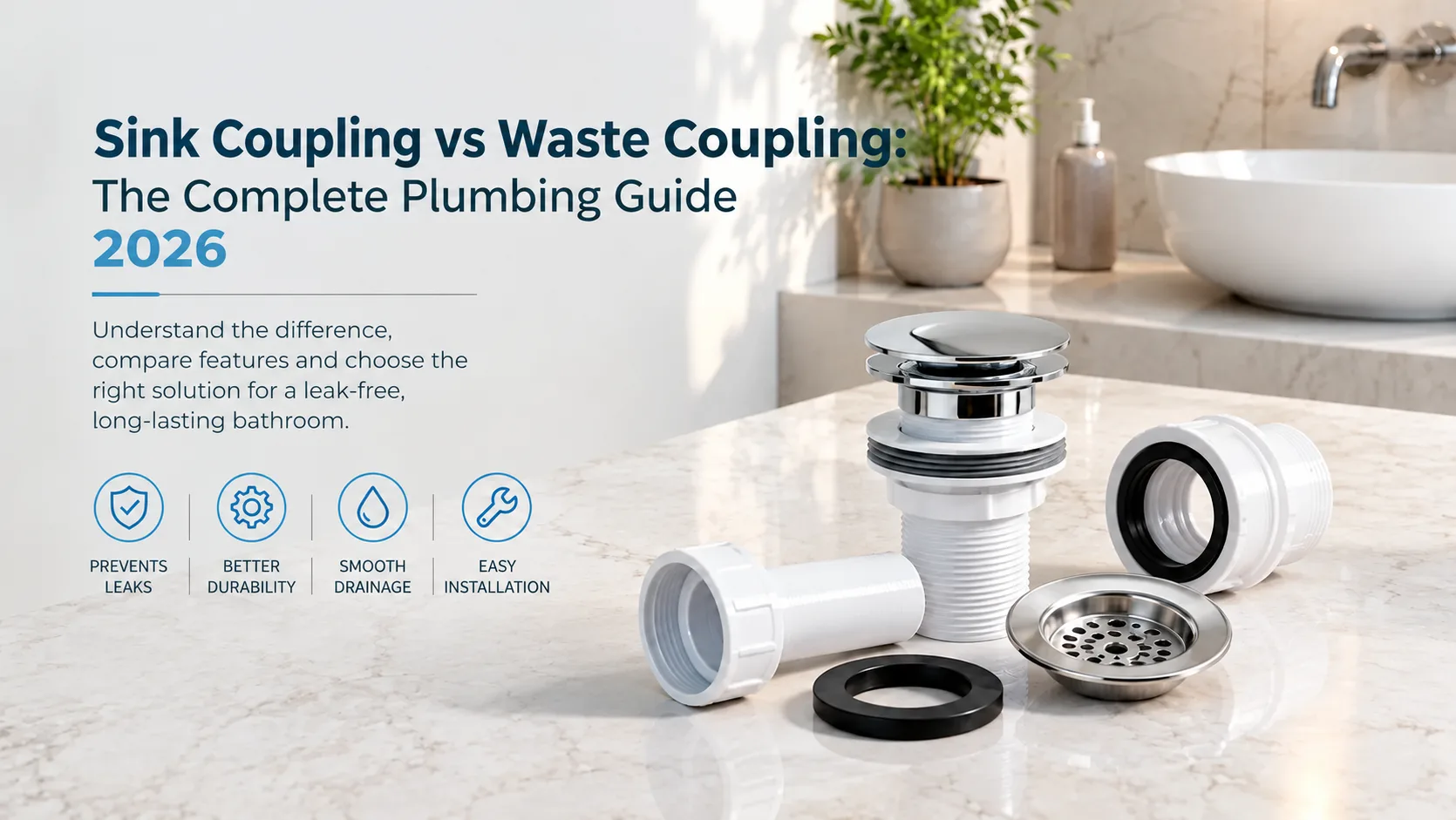
Sink Coupling vs Waste Coupling: The Complete Plumbing Guide 2026
Complete Guide to Plumbing Couplings: Sink vs Waste Coupling
Ask two different plumbers what a "coupling" is, and you might get two different answers pointing at two different parts. That's because couplings show up everywhere in a bathroom or kitchen's plumbing — connecting supply lines, joining drain pipes, and sealing off waste outlets. Two terms that cause the most confusion are sink coupling and waste coupling, and mixing them up during a renovation can mean a return trip to the hardware store.
This guide walks through what separates these two fittings, where each one belongs in your plumbing layout, and how to choose the right one without guesswork.
What Is a Sink Coupling?
A sink coupling is a short connector fitting used to join the sink's drain outlet to the trap or waste pipe beneath it. It typically sits right under the basin, linking the sink's built-in drain to the rest of the plumbing run. Most versions come as a simple threaded piece, often paired with a rubber washer to create a watertight seal between the sink and the pipe below.
You'll find this fitting on both bathroom wash basins and kitchen sink installations, since both need a reliable connection between the basin and the drainage system.
What Is a Waste Coupling?
A waste coupling, by contrast, connects further down the drainage line — typically joining the trap outlet to the wall or floor waste pipe that carries water out of the bathroom or kitchen entirely. Its job is less about linking the basin to its drain and more about carrying wastewater safely into the building's main drainage system.
Because this fitting deals with continuous wastewater flow rather than just an initial connection point, it's usually built with a slightly wider bore and a more robust seal to handle sustained flow without leaking.
Sink Coupling vs Waste Coupling: Key Differences
| Feature | Sink Coupling | Waste Coupling |
|---|---|---|
| Position in the System | Directly under the basin | Further down, near the wall or floor outlet |
| Primary Function | Connects the basin drain to the trap | Connects the trap to the main drainage line |
| Bore Size | Typically narrower | Often wider to support sustained water flow |
| Seal Type | Rubber washer and threaded joint | Rubber washer or solvent-welded joint |
| Common Materials | Brass, PVC, or stainless steel | PVC, CPVC, or brass |
| Replacement Frequency | Moderate — usually checked during sink servicing | Lower — typically checked during a full drainage inspection |
How These Fittings Work Together
Neither part functions well on its own. A typical drainage path runs from the basin, through the sink coupling, into a trap (which holds a small amount of water to block sewer gases), and then through the waste coupling toward the main waste line. If either connection is loose, cracked, or poorly sealed, you get the classic under-sink leak that shows up as water stains inside a cabinet.
For a complete kitchen sink setup, both the sink coupling and waste coupling usually need replacing together if you're upgrading an older basin, since mismatched old and new parts rarely seal properly.
Materials: What to Look For
Whether you're buying a sink coupling or a waste coupling, both are commonly made from three materials, each with trade-offs:
- PVC (Polyvinyl Chloride): Lightweight, corrosion-resistant, and budget-friendly. Works well for most residential drainage but can become brittle over many years of temperature fluctuation.
- CPVC (Chlorinated PVC): Handles higher temperatures better than standard PVC, making it a common choice where hot water drainage is involved.
- Brass: More durable and better suited to high-traffic installations, though it requires periodic checks for corrosion in areas with aggressive water chemistry.
Plumbing standards bodies like IAPMO publish material and installation guidelines that most manufacturers design toward, covering everything from wall thickness to joint integrity. In India, fittings certified under the Bureau of Indian Standards scheme go through similar testing before reaching the market, which is worth checking when comparing brands. For brass fittings specifically, certification from bodies like NSF International confirms the material is safe for continuous water contact.
A basic understanding of how a drain trap) works also helps here, since both the sink coupling and waste coupling connect directly to it and share responsibility for keeping that seal intact.
Installation Basics
Installing or replacing a sink coupling or waste coupling isn't usually a full re-plumb, but a few details matter:
- Match the coupling diameter exactly to your existing pipe — even a slight mismatch causes slow leaks over time
- Use plumber's tape or the correct sealant on threaded joints rather than over-tightening, which can crack older fittings
- Support the trap and connecting pipes so the joint isn't carrying the full weight of the assembly
- Check for a level installation — a sagging drain run collects debris and slows drainage
If you're replacing fittings as part of a broader upgrade, pairing them with matching allied bathroom fittings keeps the finish and quality consistent across the whole under-sink assembly.
Signs You Need to Replace a Coupling
Watch for these warning signs on either the sink coupling or waste coupling before a small leak becomes a bigger repair:
- Water stains or dampness on the cabinet floor beneath the basin
- A faint sewage smell near the sink, which often points to a failed seal near the trap
- Visible cracks or discoloration on the fitting itself, especially on older PVC parts
- Slow drainage that doesn't improve after clearing the trap of debris
Catching these signs early usually means a low-effort fix rather than a full drainage overhaul.
Choosing Between Materials and Finishes
If you're matching fittings to a specific bathroom style, finish matters as much as function. Chrome and brushed steel options pair well with modern faucets and showers, while standard PVC works fine when the fitting itself stays hidden inside a cabinet. For kitchens, where the area beneath the sink often stores cleaning supplies, corrosion resistance matters more than finish, since spills and moisture are more frequent there.
Households also often review their essential items checklist alongside plumbing upgrades, since grab bars, holders, and other accessories are easier to fit while the under-sink area is already opened up for coupling work.
Frequently Asked Questions
1. What's the difference between a sink coupling and a waste coupling?
A sink coupling connects the basin's drain outlet to the trap directly beneath it, while a waste coupling connects the trap further down to the main drainage line carrying water out of the building.
2. Can I replace one fitting without touching the other?
Yes, in most cases. If only the sink coupling or the waste coupling is leaking or cracked, you can usually replace that one part on its own, as long as the diameter and thread type match your existing setup.
3. What material lasts longest for these plumbing parts?
Brass tends to outlast PVC and CPVC in most conditions, though quality PVC fittings still perform well for 10-15 years under normal residential use.
4. Why is my under-sink area leaking even after I tightened everything?
Over-tightening threaded joints can actually crack the fitting or damage the washer seal. A snug fit with fresh plumber's tape usually resolves persistent leaks better than extra force.
5. Do kitchen and bathroom installations use the same type of fitting?
The basic design is similar, but kitchen setups sometimes need a wider bore to handle grease and food particles, so it's worth checking manufacturer specifications for kitchen-rated parts.
6. How do I know if a coupling is CPVC or standard PVC?
CPVC is usually a darker, cream or grey-beige color compared to the brighter white of standard PVC, and it's rated for higher temperatures — check the printed marking on the fitting itself to confirm.
7. Is a smell near the sink always a sign of a failed connection?
Not always, but a persistent sewage-like smell is one of the most common signs of a failed trap seal or a loose connection somewhere in the drainage run, so it's worth investigating rather than ignoring.
8. Can a sink coupling or waste coupling be reused when renovating a bathroom?
It's generally better to replace both during a full renovation, since older fittings may not seal properly against new basins or pipes even if they look intact.
9. What tools do I need to replace a basic plumbing coupling?
An adjustable wrench, plumber's tape, and a bucket to catch residual water are usually enough for a straightforward swap, though a pipe cutter may be needed for solvent-weld joints.
10. Are certified fittings worth the extra checking?
Yes. Fittings tested against recognized plumbing standards tend to have more consistent wall thickness and seal quality, which reduces the chance of early failure compared to uncertified alternatives.
Final Thoughts
Getting these two fittings right is less about brand preference and more about matching diameter, material, and position correctly within your drainage run. A sink coupling handles the connection right under the basin, while the second fitting carries wastewater onward to the main line — understanding that distinction is what prevents the repeat leaks that send people back to the hardware store every few months.
Browse the full kitchen sink and plumbing accessories range from RSM Bath Fittings to find fittings that match your existing setup and finish.